
Sustainability trends in international design
Fuelled by increasingly tangible climate impacts, stringent policy updates (are we all keeping up with the National Construction Code?), and a groundswell of industry-wide commitments to net zero, our industry professionals have been laser-focused on implementing sustainable solutions fine-tuned for our local context.
But the sustainable revolution is a global phenomenon, transcending borders with a wave of inspiring concepts and solutions. And so, while Australia continues to innovate within its unique context, mastering the challenges of our diverse climate and vast landscapes, looking outwards reveals a plethora of exciting ideas that are pushing the very boundaries of what’s possible.
Naturally, the imperative to address climate change is driving a powerful push towards carbon-negative construction globally; biophilic design keeps gaining momentum, and resource scarcity is amping up thoughtful specifications across the board. So here, we dig a little deeper – and look a little further – to explore some of the emerging design shifts shaping a more resilient future across the globe.
Looking at the global landscape of artificial intelligence, it’s starting to feel like the industry is putting it to good use as a transformative technological synergy between parametric design and generative AI promises unprecedented levels of sustainable optimisation.
Parametric design uses adaptable parameters to explore diverse design variations and optimise performance based on factors like sunlight and energy. At the same time, complementary generative AI employs machine learning to generate numerous design options based on sustainability goals, identifying optimal solutions for energy efficiency, material usage, and environmental impact that traditional methods might miss.
Underscored by AI’s outstanding potential for simulation and prediction of building performance under various conditions, these technologies are emerging as invaluable tools for enduring, climate-resilient design.
No wonder this trend is surging. Intuitive, user-friendly software, like Autodesk’s generative design in Revit, is increasing accessibility of these technologies worldwide, while global power-houses like Arup and Grimshaw are already actively implementing parametric design and AI, leveraging data-driven decisions that minimise environmental impact and maximise resource efficiency.
The generative, fine-tuned future of architecture is looking promising already – and that’s just the beginning of the rise of AI and machine learning in design globally.
On the opposite side of the artificial and technological end of the spectrum sits the very sensual aspect of human experience. Particularly prominent in Scandinavia and North American research institutions, the sensory architecture trend reflects the growing understanding of the powerful connection between our senses, our brains, and the spaces we inhabit, driving innovation in creating healthier and more supportive built environments.
At its very core, the development of neuro-adaptive environments recognises the profound influence of our surroundings on mood, stress, and cognitive function. This approach thoughtfully considers illumination – utilising dynamic systems that mimic natural daylight to regulate circadian rhythms and reduce reliance on artificial lighting – and sound, mitigating noise pollution while introducing calming natural elements as key to fostering well-being and focus.
This is further compounded by in-depth consideration of the tactile and material qualities of the spaces, emphasising natural palettes and textures, which are proven to improve feelings of comfort and connection.
Combined with sensor technologies that subtly monitor occupant responses and dynamically adjust conditions like light and temperature, the neuro-adaptive design holds immense potential to create dynamic, efficient and genuinely human-centric environments.
Beyond land-based considerations, a compelling international movement is turning its attention to our oceans, presenting exciting new frontiers for architectural innovation.
Ocean-positive design and the integration of the blue economy are prompting industry professionals to venture into marine environments with the explicit goal of benefiting ocean ecosystems. This trend recognises the immense economic and environmental value of these robust bodies of water – and challenges the building sector to actively contribute to its sustainable future.
In Europe, this trend is manifesting through the exploration of environmentally friendly foundations for offshore wind farms, which are designed to enhance marine habitats by providing surfaces that marine life can colonise, like bio-concrete with textures specifically engineered to encourage coral growth.
Taking this trend even further, we’re seeing innovative designs for resilient floating structures that address rising sea levels while minimising ecological impact, like South Korea’s Oceanix Busan project, the world’s first prototype of a sustainable floating city.
On a smaller and less conceptual scale, innovations in seaweed farming – now incorporating bioplastics and carbon sequestration considerations – are gaining traction, and coastal restoration projects, leveraging natural solutions like mangrove reforestation, are being implemented to enhance coastal resilience and ecosystem health.
This trend – particularly relevant to Australia’s extensive coastline – inspires a radical rethinking of how architects and designers can engage with marine habitats, offering a blueprint for a future where the built environment actively contributes to ecological preservation and sustainable economic growth.
If we think the robust expanse of the ocean is too far removed to offer land-based architectural inspiration, there’s a place even further away that’s brimming with design ideas: Space. The seemingly disparate field of space architecture, focused on designing habitats for rather extreme and utterly austere off-world environments, is proving to be a surprisingly rich source of innovation for terrestrial sustainability.
The fundamental challenges of space – extreme resource scarcity, closed-loop life support, and survival in harsh conditions – require highly efficient and resilient solutions, highlighting powerful parallels with our Earthly context of escalating climate emergency.
For instance, the closed-loop life support systems developed for spacecraft and potential lunar or Martian habitats, which must recycle everything with near 100% efficiency, are directly informing advanced water recycling technologies, cradle-to-cradle urban agriculture, and waste management techniques.
And what about modular, rapidly deployable building systems designed for space exploration? Unsurprisingly, these are highly relevant for creating sustainable and resilient infrastructure on Earth, particularly in disaster relief scenarios or for off-grid communities.
Looking deeper into these space-led structures, advanced material technologies developed for extreme temperature fluctuations and even radiation are also inspiring innovation in terrestrial construction.
This includes research into lightweight yet incredibly strong composites, self-healing materials, and highly efficient insulation, cross-disciplinary applications of which are being explored by organisations like NASA and the European Space Agency, alongside specialised architectural firms.
From the intricate algorithms optimising building performance to the vast potential of our oceans and the distant inspiration of space, the international design community is demonstrating remarkable ingenuity in the pursuit of a sustainable future that transcends borders.
As Australia continues its own sustainability journey, these global yet profoundly relevant shifts serve as a powerful reminder of the collective creativity driving us towards a more environmentally conscious and human-centric world, urging us to look further, higher, and deeper for solutions that will shape a brighter tomorrow.
Has your latest project pushed the boundaries of sustainable architecture? Now is your chance to showcase it.
The 2025 Sustainability Awards are now open, and our jury is looking for innovative designs that fuse environmental responsibility, human well-being and outstanding visual appeal. Click here to find out more.
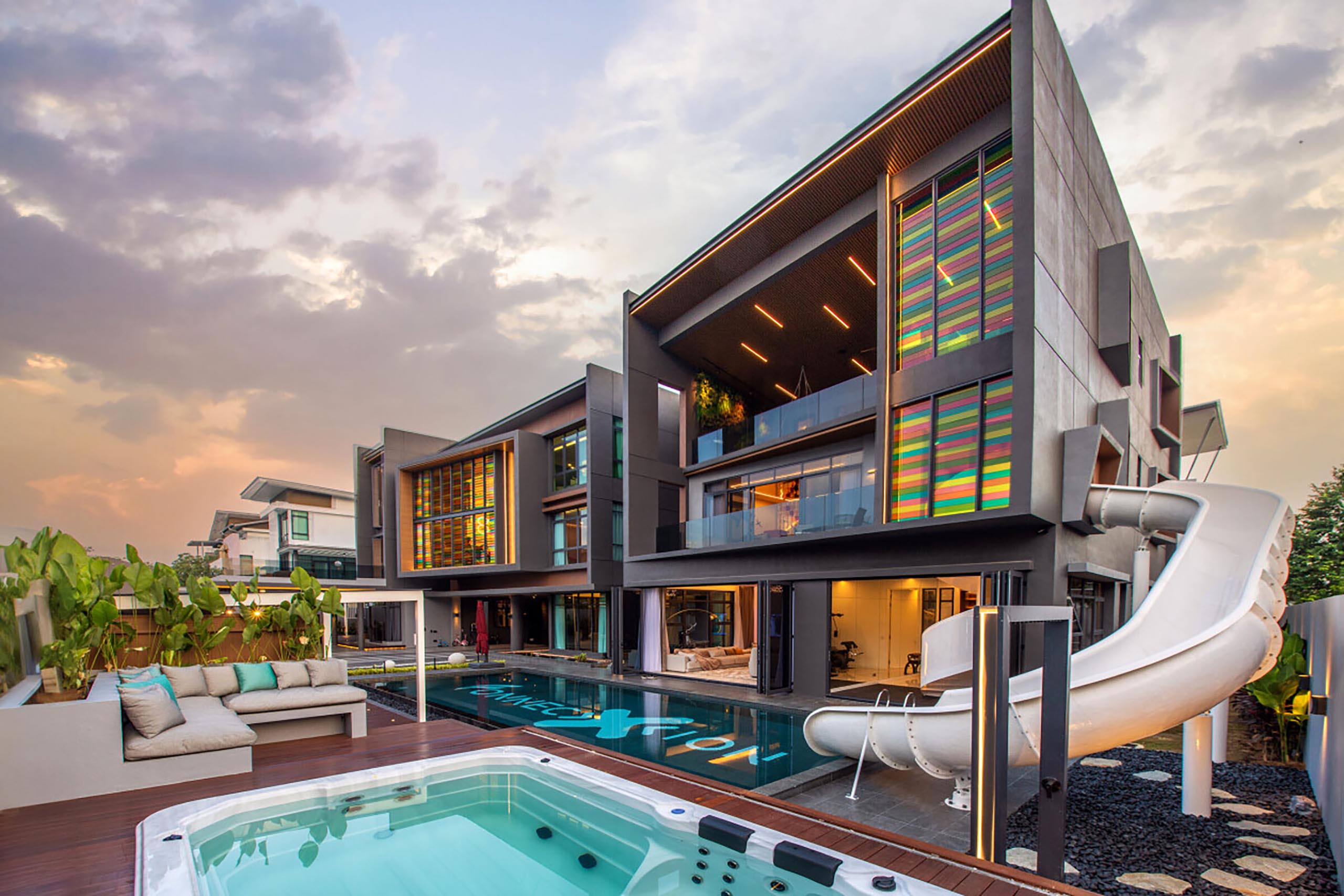
Image: Spectrum House by TKCA Architect was shortlisted last year in the International design category / Photography by Heartpatrick
link




:max_bytes(150000):strip_icc()/LeahOC-531cb9a29fd548d3a7a1bdcda7ba4bc1.png "These Are the 7 Most Timeless Paint Colors")

