
Goodbye to traditional beds: the 2026 trend transforms the bedroom into a smart space with multifunctional models, hidden drawers, LED lighting, USB ports, and designs that combine comfort and technology

Goodbye to traditional beds: the 2026 trend transforms the bedroom into a smart and functional space.
The trend for 2026 points to beds that are no longer just places to rest, but instead become places to organize, illuminate, and connect the bedroom with technology and design.
Multifunctional models with hidden drawers, LED lighting, USB ports, and a planned structure are winning over those who need to make the most of every inch without sacrificing comfort.
The way people decorate their bedrooms is changing because the trend for 2026 is to place multifunctional beds as a central piece of the decor and daily routine. It’s no longer just about sleeping well; it’s about living better in smaller spaces, with more organization and built-in technological resources. The bed then serves several functions at once, solving problems of lack of space, excess furniture, and cluttered visuals.
This transformation accompanies the The rise of compact apartments and the urban lifestyle. By integrating storage chests, drawers, niches, LED lighting, and even USB ports into a single piece of furniture, the bedroom gains intelligence without losing its modern and minimalist look. The proposal is clear: fewer freestanding pieces of furniture and more complete solutions in a single item.
Multifunctional beds: what defines the new generation of bedroom furniture?
Multifunctional beds, which are a key trend for 2026, are designed to serve more than one purpose in the same space. Instead of simply supporting the mattress, they organize, illuminate, and connect.
Models with built-in drawers, internal dividers, ample storage space, LED lighting, and USB outlets show that the bedroom of the future is already available and has a guaranteed audience. This combination brings together home technology, smart carpentry, and contemporary decor.
Furthermore, the design follows the “less is more” concept. Cleaner structures, neutral tones, and discreet finishes allow the bed to be the centerpiece of the room without making it feel heavy. It’s the kind of furniture that works in master bedrooms as well as children’s rooms, teenagers’ rooms, and studios.
Why this solution will dominate 2026
The 2026 trend is growing because it solves three issues at once: space, practicality, and aesthetics. In smaller properties, every extra drawer matters. Instead of buying a bed, dresser, and desk separately, the consumer invests in a single piece that provides everything.
This also ties into the pursuit of sustainability, since fewer pieces of furniture mean less material, less transportation, and greater durability.
Another point is the fast-paced lifestyle. Those who work from home or share a room with other functions need furniture that keeps up with their routine. Beds that convert into workstations, that conceal an extra mattress, or that have their own lighting for reading make the room more adaptable and up-to-date with new ways of living.
- Bed with internal storage compartment for bedding, comforter, and smaller bags.
- Bed with side or front drawers for organizing everyday items.
- A retractable or expandable bed that converts into a sofa, bench, or double bed upon request.
- Bed with built-in desk or support for those who need to work in the bedroom.
- High-tech bed with LED lighting, USB port, and, in some cases, app control.
Each of these versions caters to a specific type of resident, but they all follow the same principle of the 2026 trend: occupy little space, deliver a lot, and keep the room visually clean.
How to choose the ideal multifunctional bed
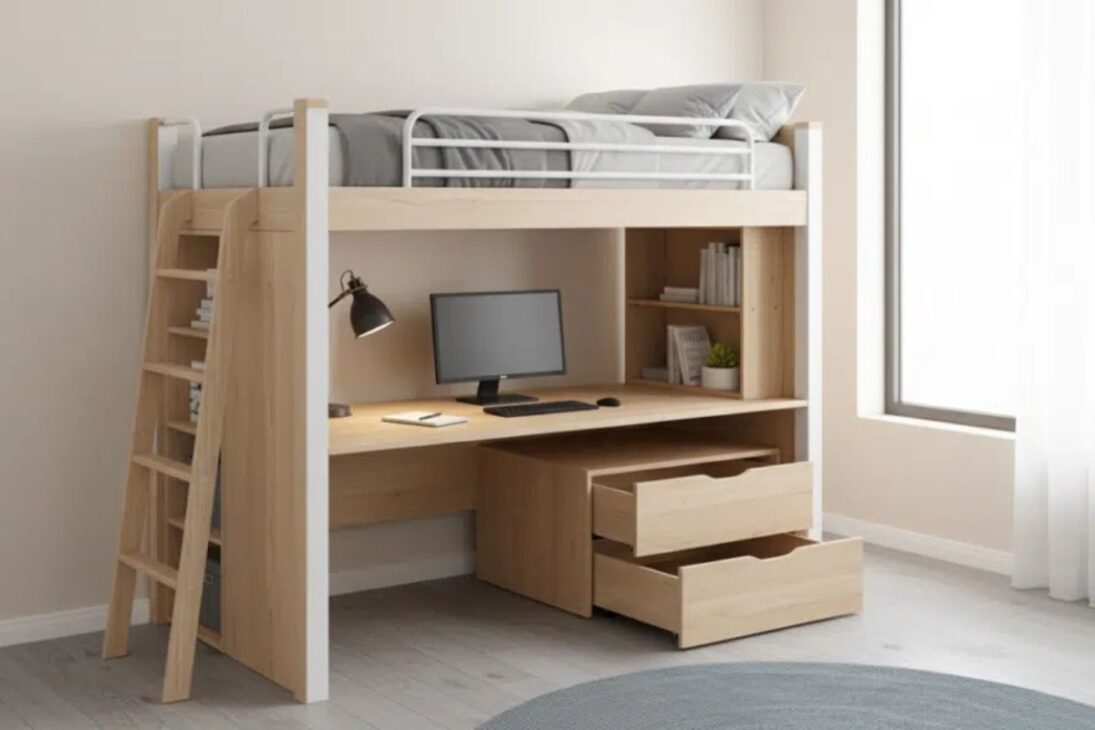
The first step is to measure the space and understand the circulation. Small bedrooms benefit from beds with drawers or storage compartments, because they replace the dresser and free up wall space. Those who work from home may prioritize models with a retractable desk or support panel.
Those who receive visitors or have a guest room can opt for expandable beds that convert into a double bed when needed.
It’s also worth analyzing the material and the opening system. Sturdy structures, quality slides, and secure hardware increase durability. Choosing neutral tones ensures that the furniture remains current even when the decor changes. And, if the room has few power outlets, models with integrated USB and LED lighting make a difference.
How much does it cost to get on this trend?
Prices vary depending on the level of technology and the type of carpentry. There are simpler options with drawers starting at around R$ 1.500 and more complete versions, with LED lighting and connectivity, that can exceed R$ 5.000.
The expectation for 2026 is for more domestically produced products and more customizable versions, which tends to make access easier. Since furniture replaces other items, many consumers see the investment as a long-term one.
More than a trend, a change in concept.
Calling this a 2026 trend isn’t an exaggeration, but it’s not a passing fad either. Multifunctional beds embody exactly what modern homes demand today: Beautiful, smart furniture designed for compact spaces.
Social media for interior design, architects, and manufacturers. They are now treating these beds as the new centerpiece of the bedroom, no longer the wardrobe.
Do you think the 2026 trend of multifunctional beds will truly replace traditional beds, or do you still prefer the classic model in your bedroom? Comment below.
link



:max_bytes(150000):strip_icc()/LeahOC-531cb9a29fd548d3a7a1bdcda7ba4bc1.png "These Are the 7 Most Timeless Paint Colors")

